What That AC Noise Means
Different noises point at different faults, and a couple of them mean stop using the system immediately. Here's how to read what…
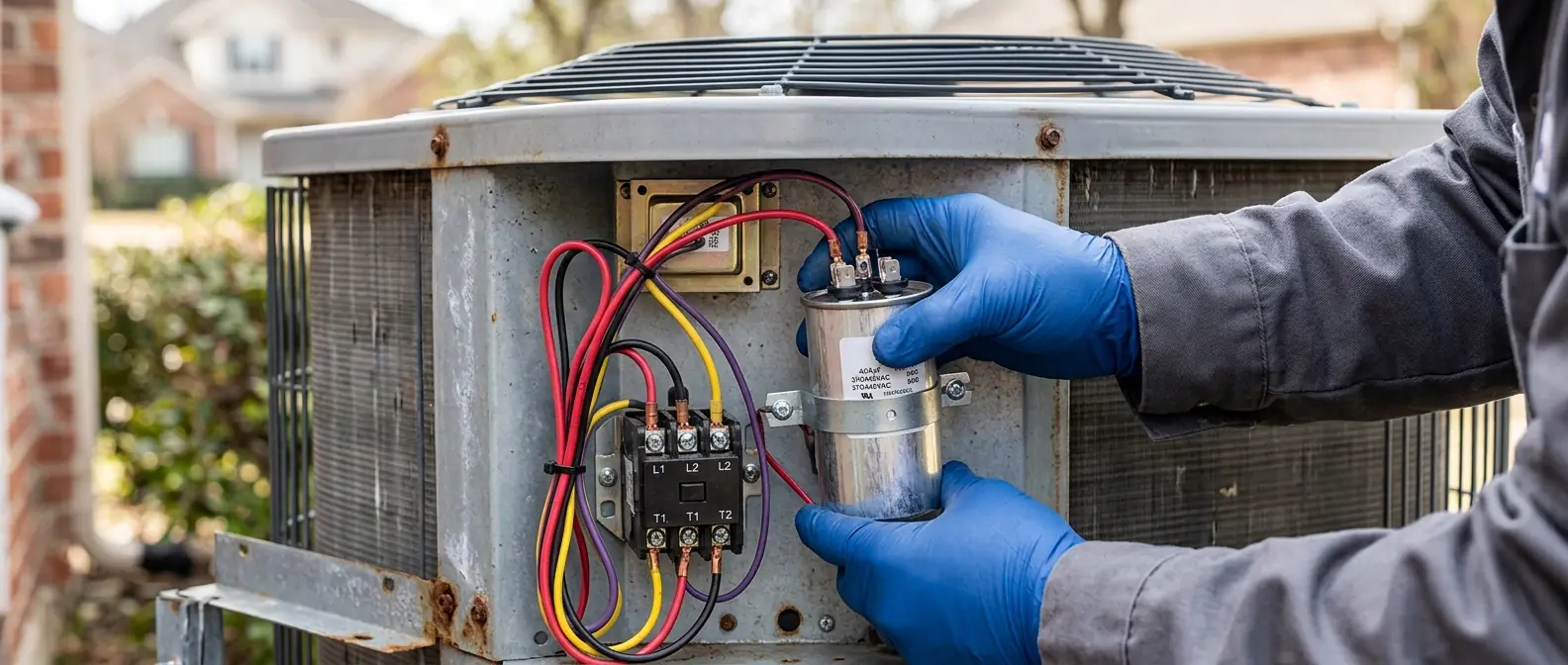
Different noises point at different faults, and a couple of them mean stop using the system immediately. Here's how to read what yours is telling you.
Noise by noise
| Sound | Usually means | Urgency |
|---|---|---|
| Rattling | Loose panel or debris in the outdoor unit; failing fan bearings | Soon |
| Buzzing | Failing capacitor, loose wiring, or a contactor problem | Soon |
| Clicking, then nothing | Failed capacitor or contactor | Soon |
| Screeching or squealing | Motor bearings, or a failing blower | Soon |
| Loud bang on startup | Compressor or delayed ignition on gas heat | Stop using it |
| Hissing | Refrigerant leak | Switch off, ventilate |
| Gurgling | Condensate drain, or refrigerant flow | Monitor |
| Soft whooshing | Normal airflow | None |
The two that mean stop now
A loud bang or boom on startup. On a cooling system that often means compressor trouble; on gas heat it can mean delayed ignition, where gas pools before igniting. Neither should be run on.
Hissing or a chemical smell. Likely a refrigerant leak. Switch the system off, ventilate the area, and get it looked at.
Noises that are normal
A gentle click as the thermostat calls for cooling, a low hum from the outdoor unit while running, and a soft whoosh from vents are all fine. So is some expansion ticking from ductwork as it warms and cools.
What matters is change. A noise your system has always made is far less interesting than one that started last week.
Need this looked at in Frisco or nearby? Our diagnostic is $99, credited to the repair, and you get a fixed price before any work starts. Describe the noise and get a price →
Get a real price for your repair
$99 diagnostic, credited when you go ahead.